How to Grow Carrots in Raised Beds: Straight Roots Every Time
- Primary Signal: How to Grow Carrots in Raised Beds: Straight Roots Every Time
- Overview: Carrots are easy to grow and easy to get wrong: forked, stunted, or woody roots almost always mean the soil was wrong. Raised beds fix that, because you control the soil completely...
- Verification: Analyzed and compiled by SkyFree Living editorial monitoring desk.
Carrots are one of the most satisfying vegetables to pull from the ground, and one of the most frustrating when they come out forked, stunted, or woody. The good news is that almost every carrot problem is a soil problem, and raised beds let you control the soil completely. A raised bed gives you loose, deep, stone-free soil, which is exactly what a carrot root needs to grow straight down. If your garden soil is heavy clay or full of stones, a raised bed is the difference between a harvest and a disappointment.
Carrots need soil that is loose at least 30 centimetres deep, so the root can grow straight down without hitting anything hard. Garden soil rarely offers that: it is usually compacted, stony, or heavy clay. A raised bed solves all three problems at once. You fill it with a loose mix, you control the depth, and the soil warms up faster in spring, so you can sow earlier. Raised beds also drain well, which matters because carrots rot in waterlogged soil, and they keep the soil loose year after year if you do not walk on it.
The bed should be at least 30 centimetres deep for standard varieties, and 45 centimetres for long varieties like Nantes or Imperator. If your bed is shallower, grow short round varieties like Parisian Market, which are bred for shallow soil and still taste excellent. The bed does not need to be large: a one-metre square bed can grow 60 to 80 carrots, which is plenty for a family. And because the soil is contained, you can improve it every year with compost without the goodness washing away into the surrounding ground.
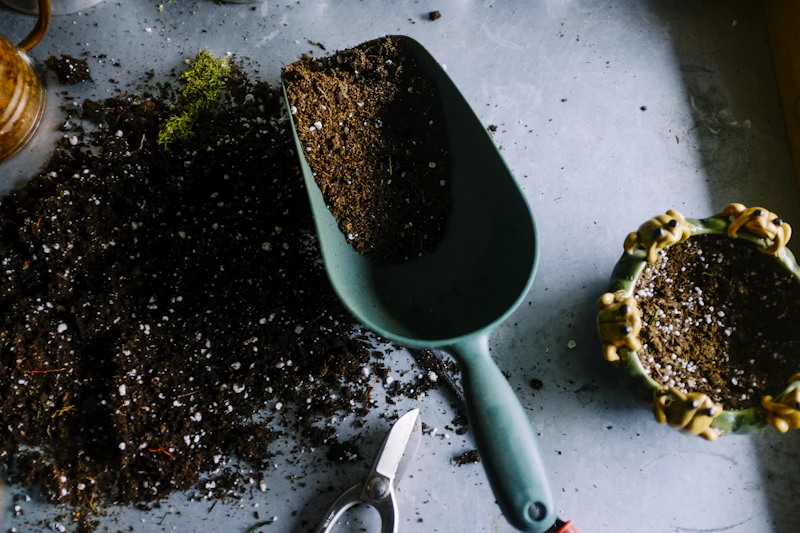
Fill the bed with a mix of topsoil, compost, and sand or perlite, roughly equal parts, and mix it well. The key word is loose: squeeze a handful and it should fall apart, not form a ball. Remove every stone bigger than a pea, because a carrot root that hits a stone forks into two, and a root that hits a clod bends. Do not add fresh manure, because it makes carrots fork and grow hairy side roots. Well-rotted compost is perfect. Fresh manure is the most common cause of forked carrots, and it is entirely avoidable.
Sow carrot seed thinly, in rows 15 centimetres apart, and cover with only a few millimetres of soil. Carrot seed is tiny and needs light to germinate, so do not bury it deep. Mix the seed with a little dry sand before sowing, which spreads it more evenly and stops you sowing too thickly. Water gently with a fine rose on the watering can, so you do not wash the seed away. Then cover the bed with a board or fleece to keep the soil moist and dark, and check every few days for the first green shoots.
Thinning is the job beginners skip, and it is the one that matters most. When the seedlings are 5 centimetres tall, thin them to 5 centimetres apart. When they are 10 centimetres tall, thin again to 8 centimetres apart. Crowded carrots stay small and push each other out of shape. Thin in the evening, when the carrot fly is less active, and water after thinning to settle the soil around the remaining plants. The thinnings are edible: the tiny roots make a sweet addition to a salad, so nothing is wasted.
Water little and often, keeping the soil evenly moist from sowing to harvest. Carrots that dry out and then get flooded split, and carrots that dry out for a long time go woody. A deep soak once a week is better than a light sprinkle every day, because it encourages the root to grow down looking for water. Mulch between the rows with straw or grass clippings to hold the moisture in and keep the soil cool. And never let the bed dry out completely in the first three weeks after sowing, or germination fails.
Carrots are ready when the shoulders, the top of the root, are as wide as your thumb, usually 12 to 16 weeks after sowing. Pull one to check before you harvest the row. Loosen the soil with a fork first, then pull gently, because yanking a carrot from dry soil snaps the root. Harvest in the morning, when the roots are crisp and full of water. If you sowed in succession, every two or three weeks, you will have a steady supply from summer into autumn.
Store carrots in a cool, dark place in damp sand or in a box of slightly moist compost, with the tops twisted off. Stored this way, they keep for months without going soft. Do not store them in the fridge in a plastic bag, where they sweat and rot. And do not wash them before storage: brush off the loose soil and wash them only when you are about to eat them. A raised bed of carrots, sown in succession and stored properly, can feed a family from summer until the first frosts.
More from SkyFree Living