How to Grow Blueberries on a Small Homestead: Soil, Varieties, and Big Harvests
- Primary Signal: How to Grow Blueberries on a Small Homestead: Soil, Varieties, and Big Harvests
- Overview: Blueberries are one of the most rewarding fruits a homesteader can grow — if you get the soil right. Learn which varieties to plant, how to fix acidic soil, and how to harvest for ...
- Verification: Analyzed and compiled by SkyFree Living editorial monitoring desk.
A mature blueberry bush can give you eight to ten pounds of fruit a year for decades, and the berries freeze beautifully, which makes them one of the best investments on a small homestead. The catch is that blueberries are picky. They demand acidic soil, and if you skip that one requirement, no amount of watering or fertiliser will save them.
Blueberries want soil with a pH between 4.5 and 5.5, which is far more acidic than most garden soil. Test your soil before you plant — a simple test kit costs a few dollars and saves you from watching bushes slowly yellow and die. If your soil is above 5.5, you will need to amend it with elemental sulphur, peat moss, or acidic compost, and you will need to keep amending it every year.
Raised beds filled with an acidic mix are often the easiest answer on a homestead with alkaline soil. A bed of peat moss, pine bark, and compost gives you full control of pH from day one. Mulch heavily with pine needles or wood chips, which break down acidic and help hold the moisture blueberries love.
Plant at least two different varieties that bloom at the same time, because cross-pollination gives you bigger berries and heavier yields. In cold climates, northern highbush varieties like Bluecrop, Patriot, and Duke are reliable. In warm climates, southern highbush and rabbiteye varieties like Sunshine Blue and Brightwell handle the heat. Check your hardiness zone before you order, not after.
Stagger ripening times to stretch the harvest. An early variety, a mid-season variety, and a late variety can give you fresh berries for six to eight weeks instead of two. Plant them in a row with four to five feet between bushes, and give each bush full sun — six to eight hours a day is the minimum for a real harvest.
Blueberries have shallow roots and they hate drying out. Water deeply and consistently, especially in the first two years and while fruit is ripening. A drip line or soaker hose under the mulch is ideal, because wet leaves invite disease and overhead watering wastes water. Aim for about an inch of water a week, more in hot weather.
Feed with an acid-loving fertiliser in early spring, and never use a general garden fertiliser with nitrates, which blueberries cannot use well. Prune in late winter: remove dead wood, thin out the centre so light reaches inside, and cut back a few of the oldest canes each year to encourage new growth. A well-pruned bush produces more fruit than a bush left to grow wild.
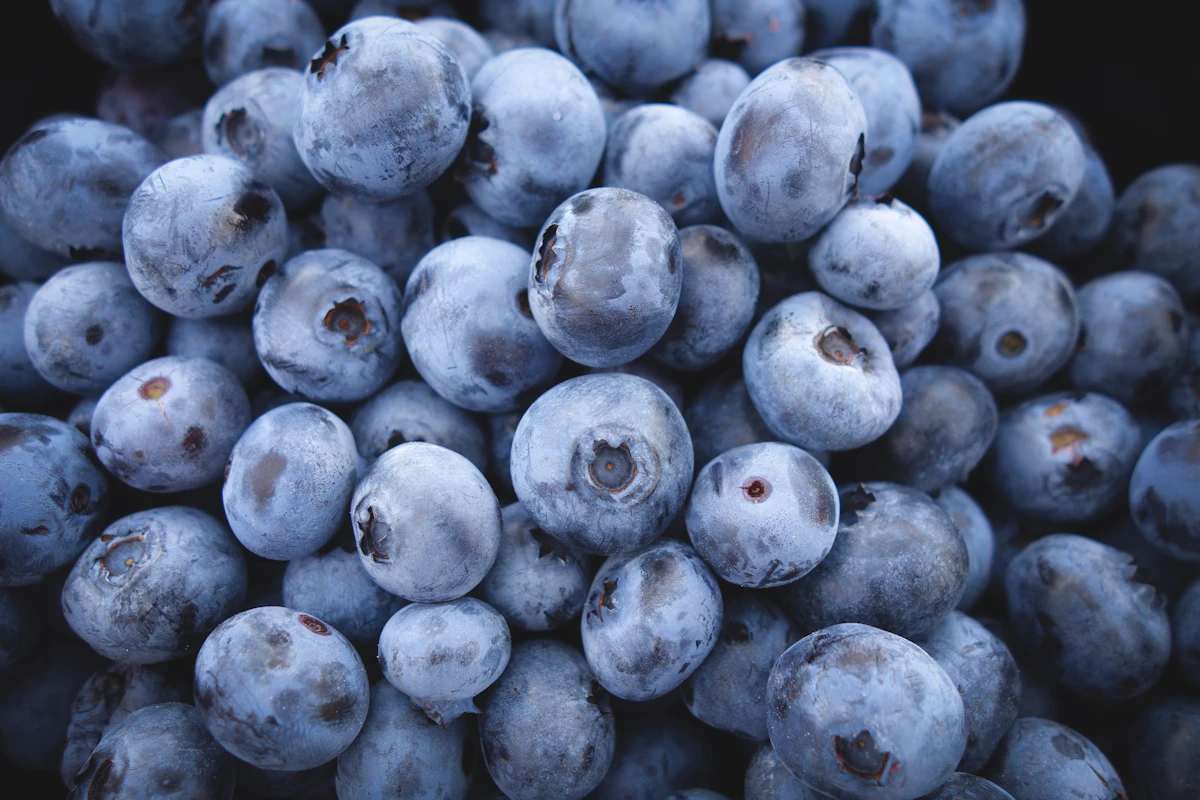
Berries are ready when they are fully blue, with no red or pink left, and they come off the stem with a gentle tug. Taste one before you pick a whole bucket — colour alone can fool you, and a berry that looks ripe may still be tart. Pick every few days through the season rather than stripping a bush at once.
Birds love blueberries as much as you do, and a net is the only reliable defence. Drape bird netting over the bushes as soon as berries start to colour, and secure it at the bottom so birds cannot slip underneath. Freeze the surplus on trays before bagging, so the berries stay loose and you can pour out exactly what you need all winter.
One mistake to avoid: planting a single bush and expecting a harvest. Blueberries need cross-pollination, and a lone bush will give you a fraction of what two or three varieties produce together. Plant in groups, keep the soil acidic year after year with a spring top-up of sulphur or acidic mulch, and be patient — a blueberry bush takes two to three years to hit its stride, but it will then feed your family for decades. That patience is the whole bargain of the homestead: a little work now, a harvest for a lifetime.
More from SkyFree Living


