Tiny Home Solar Panel Placement: Roof vs Ground Mount — Which Wins?
- Primary Signal: Tiny Home Solar Panel Placement: Roof vs Ground Mount — Which Wins?
- Overview: Roof mounts save space but trap heat and complicate maintenance; ground mounts produce more power but need land and protection. Here is how to choose for a tiny home....
- Verification: Analyzed and compiled by SkyFree Living editorial monitoring desk.
Every off-grid tiny home needs solar panels somewhere, and the first decision is where they actually go: on the roof or on the ground beside the home. Both work, and both have real trade-offs that matter more on a tiny home than on a normal house, because roof space is small, the structure moves, and every watt counts. The wrong choice costs you power output, money, or both, and moving panels later is expensive. This guide compares roof and ground mounts on the things that decide the outcome: power production, cost, maintenance, and how each fits a life on wheels.
Roof Mounts: Compact, But Hot and Hard to Reach
A roof mount uses space you already own. On a tiny home that matters, because the whole point of a small footprint is using every square foot twice. Panels on the roof need no extra land, no separate foundation, and no trenching for cables, which keeps the installation simple and the yard clear. For a stationary tiny home on a small lot, that alone can settle the decision.
The downside is heat and access. Panels lose efficiency as they warm up, and a roof-mounted panel sits in still, hot air with little airflow underneath, which can cut output by 5 to 10 percent on a hot afternoon compared with the same panel in free air. Cleaning is also harder: climbing onto a tiny home roof with a bucket and a soft brush is awkward, and dirty panels lose more power than most owners expect. On a tiny home on wheels, there is a structural question too — the roof must carry the weight and the wind load while driving, and the mounting hardware must be through-bolted and sealed, not just screwed into thin decking.
Ground Mounts: More Power, More Work
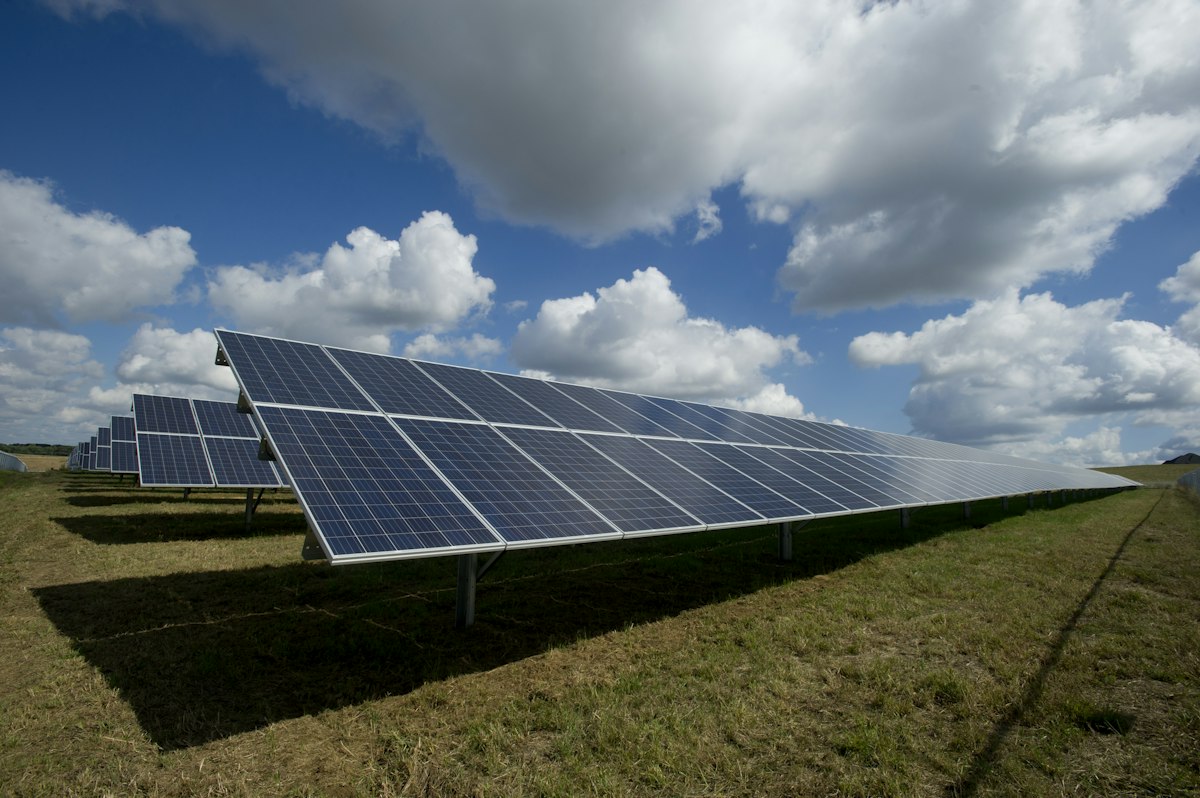
A ground mount fixes almost every problem a roof mount creates. Panels sit at the perfect tilt angle for your latitude, with full airflow underneath, so they run cooler and produce more — typically 10 to 15 percent more energy over a year than the same panels flat on a roof. Cleaning takes five minutes with a long-handled brush while standing on the ground, and adding panels later is as simple as extending the rack. Snow slides off a tilted ground array far more easily than off a nearly flat roof array, which matters in cold climates.
The price is land and infrastructure. A ground mount needs a patch of unshaded ground, concrete footings or ground screws, and a buried cable run back to the home, which adds cost and a weekend of digging. Panels at ground level are also easier to damage — a mower, a curious animal, or a falling branch can crack one — and in some places they need a fence. For a mobile tiny home, a ground mount is a problem: you either leave it behind or dismantle it every time you move, which defeats the purpose of wheels.
How to Decide for Your Situation
If your tiny home moves, the roof wins by default. A ground array you cannot take with you is not an asset, it is a fixture you abandon. Size the roof array generously to make up for the heat and angle losses, and choose panels with a good temperature coefficient so hot days cost you less. If your home is stationary on land you own, the ground mount usually wins on lifetime value: the extra 10 to 15 percent production pays back the rack and trenching cost within a few years, and the easier maintenance keeps output high for the full 25-year life of the panels.
There is also a middle path that many tiny home owners take: a small roof array for the essentials, plus a portable ground array — two or four panels on a folding stand — that you deploy when parked for a while and fold away when you move. It gives you the mobility of a roof system with most of the production advantage of a ground system, and it costs far less than a full fixed ground mount. Whichever route you choose, measure your real daily usage first, then size the array for the worst month of the year, not the best — a system that only works in June is not a system at all.
Roof mounts suit mobile tiny homes and tight lots; ground mounts suit stationary homes where every extra watt matters. Match the mount to how you actually live, not to how the installation looks in a photo, and your solar will pay you back for decades.
More from SkyFree Living